Anúncios
Spotting bright plumage often starts with small daily moments. Many people notice a flash of red or a glossy wing while grabbing the mail or watching kids play. Even extremes prove range: the South Polar Skua has been recorded at the South Pole, showing that birds live in nearly every environment.
The familiar american robin is usually the first bird people learn. Its presence helps new observers focus on shape and hue before other traits. This short guide moves you beyond the usual sightings to identify the vivid visitors in your yard.
When you’re unsure, try the free Audubon bird guide app to solve ID puzzles fast. With a few simple clues—size, pattern, and shade—you can learn to read the colors and marks that neighborhood species display. Start small, look closely, and enjoy becoming a more observant backyard watcher.
Introduction to Backyard Birding
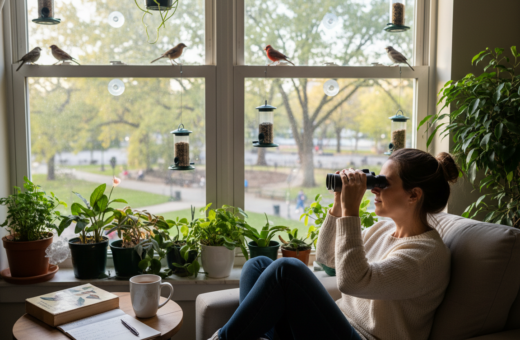
Backyard watching turns ordinary afternoons into a close-up nature lesson. From a kitchen window or a porch chair, you can observe local habits, arrival times, and social behavior without special gear.
Start by listening for songs and calls. Many identification clues come from sound and movement as much as from appearance.
Anúncios
You do not need high-end optics to begin. A pair of binoculars and a notebook are enough to learn familiar patterns. Watching how a bird feeds or flies often reveals its identity quickly.
- Set a regular time to watch—consistency reveals seasonal shifts.
- Note size, posture, and any repeated actions you see.
- Keep a simple log to track when visitors arrive or leave.
“Patience and a few notes will turn brief glimpses into lasting knowledge.”
Why Common Bird Colors City Species Thrive in Urban Environments
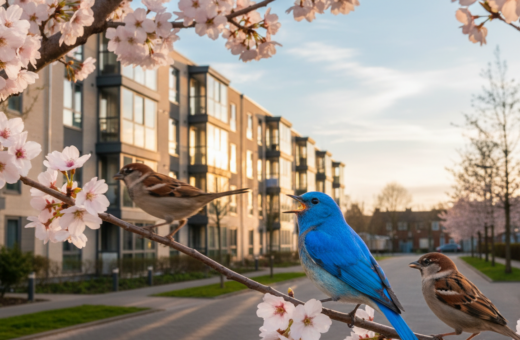
Urban neighborhoods reshape which feathered visitors stand out and why. A major study led by Bart Kempenaers at the Max Planck Institute examined over 1,200 birds to track how urbanization alters appearance across habitats.
Anúncios
The impact of urbanization
Research shows that urban areas often favor more vivid displays. Cities tend to be warmer and have fewer natural predators. That shift lowers the advantage of hiding with dull tones.
The Impact of Urbanization
Because concrete and asphalt dominate streets, bright plumage can actually help individuals signal mates or assert territory. At the same time, urban growth often reduces overall biodiversity.
Why Brown Plumage is Less Common
Data from the Kempenaers study indicate birds in urban areas are less likely to display brown plumage than those in rural places. Reduced predation and novel food sources change selective pressure.
- Less need for camouflage in safer, warmer sites.
- Colorful individuals may find mates more easily in artificial landscapes.
- Urban habitats can favor adaptable feeders and bold foragers.
“Urbanization reshapes which traits survive; the palette of our neighborhoods tells that story.”
The Science of Plumage and Urban Adaptation
Plumage reflects a bird’s response to its surroundings, and cities shape those signals in distinct ways.
Feathers do more than look pretty. They help with temperature control, attract mates, and settle disputes. In urban areas, these roles change as landscapes shift.
Researchers found that when you account for lower species counts, communities in cities show greater color diversity than rural ones. That means fewer types does not equal less visual variety.
- Thermoregulation: Dark or reflective feathers alter heat gain in paved environments.
- Mate choice: Bright markings help individuals stand out against artificial backdrops.
- Competition: Visible traits affect social hierarchy where predators are scarce.
Artificial light and new background hues influence which birds thrive. Being visible is less risky in many built habitats because predators are fewer.
“Understanding plumage science helps explain why certain individuals adapt so well to expanding urban habitats.”
Identifying the Vibrant Red Birds of Your Neighborhood
Spotting bright reds near your feeders can be one of the easiest ways to learn local avian habits. Start by noting size, beak shape, and where the bird lands. These clues speed up identification.
Northern Cardinal
The Northern Cardinal shows a bright red body and a black face that make it stand out. Males are vividly red while females have a warm, muted back and crest.
Fact: The northern cardinal is the official state bird for seven states.
House Finch
Male house finches wear red on the face and belly; females are brown and streaked. Look at the bill and wings; finches have conical beaks for seeds.
Ruby-throated Hummingbird
These tiny migrants sport iridescent throat patches on males and fly with rapid wing beats. They arrive in spring, feed at nectar feeders in summer, then head south for winter.
- Attract them: Offer sunflower seeds or suet at a reliable feeder.
- Note: The american robin is also common on lawns and helps you judge size in the yard.
Recognizing Blue and Iridescent Species
Not all blue feathers come from pigment. Many are structural — tiny keratin particles scatter light to make the vivid blue we see on a Blue Jay.
Look for pattern and posture. Blue Jays show a complex band of black, white, and blue across their wings and tail. Steller’s Jays stand out with a dark head and bright blue lower body in conifer-rich areas.
- Note the size and the specific color of the back to tell similar individuals apart.
- Watch the wings in flight — patterning often reveals identity faster than body color alone.
- These birds are bold and may visit feeders year-round, especially where suet or seeds are offered.
When light hits at different angles, iridescence can shift. That change explains why the same bird can look dull one minute and brilliant the next. Keep a small notebook and mark head and beak details to improve IDs over the year.
“Small details — pattern, size, and angle — make iridescent identification much easier.”
Common Brown and Gray Birds Found Near Homes
Muted shades and steady habits make a few species easy to spot if you know where to look. These neutral-toned visitors are often the first to use feeders and the last to leave in winter.
Mourning Dove
The Mourning Dove is one of the most widespread in North America and is often seen foraging on the ground. Look for its uniform brown-gray body, light-blue eye ring, and a sharp, pointed tail.
Fact: Parents feed young with a chunky, yellow “pigeon milk” from their crop. That nutrient-rich secret helps chicks grow fast.
House Sparrow
House Sparrows thrive around people and appear in groups near sidewalks, bushes, and feeders. Males show a black patch on the chin and throat that can signal dominance in the flock.
These birds eat seeds and scraps year-round and adapt to many habitats—from forest edges to suburban streets. Watching size, beak shape, and head marks makes ID simple.
“Watching behavior and small field marks often beats relying on bright plumage alone.”
- Most of these visitors are found throughout multiple areas and states.
- They use feeders and ground food, so offering seeds or suet attracts them.
- Note wings, back patterns, and belly shape to tell similar individuals apart.
The Distinctive Black and White Patterns of Local Birds
High-contrast plumage often reads like a logo from across a lawn. Those bold patterns make ID quick and reliable in many neighborhoods.
Look for sharp patches on the head, clear white bars on the wings, or a dark back with bright white accents. These marks tell you about feeding style and social behavior.
Field facts: Black-billed Magpies build massive, round nests that can reach three feet across and include entry and exit holes. Their iridescent feathers contrast with stark black-and-white patterning.
Compare woodpeckers at a suet feeder. Downy Woodpeckers are the smallest and visit feeders often. Hairy Woodpeckers look similar but have larger size and a thicker beak.
The Red-bellied Woodpecker is named for a faint wash on its belly, yet the red cap is the best mark to note. In flight, many of these individuals show white wing bars that help confirm ID.
- Scan the body and head first, then check wing bars.
- Use winter and summer sightings to learn when each one lives in your area.
- Offer suet or seeds at a feeder to attract and observe these patterns up close.
“Simple black-and-white contrasts make backyard ID faster and more fun.”
How Light and Environment Affect Your Observations
Light and surroundings can change how a backyard visitor appears to the eye. Shifts in sun angle, shade, or artificial light make feathers look brighter or muted.
The Role of Artificial Light
Artificial light in cities can keep some birds active well after sunset. That activity alters when they call and when they look for food.
- Streetlights and porch lamps may make some individuals feed at night near feeders or under trees.
- The European Starling, introduced to the United States in 1890, shows a spiky yellow beak and glossy black back that can gleam under lamps.
- Watch how the angle of the sun or a streetlight changes the color on the head, wings, or body when you ID a species.
- In summer and winter, light shifts combine with behavior changes; note size, beak, and males’ markings to improve IDs.
“Understanding light is a simple way to sharpen your backyard viewing and make IDs more reliable.”
Tips for Attracting Colorful Birds to Your Feeders
Small changes make a big difference. Provide a mix of high-quality seeds in clean feeders to draw species like the northern cardinal and house finch. Fresh food is the simplest invite.
Plant native flowers to offer nectar for hummingbirds in summer. Male Ruby-throated hummingbirds arrive in spring to stake territory and may leave as early as August, so blooms and feeders matter during that window.
- Vary food: seeds and hulled sunflower for finches; suet blocks to attract woodpeckers and insect-eaters.
- Keep feeders clean: a tidy feeder filled often keeps local birds returning through winter and into warm months.
- Watch interactions: note size, beak shape, head and back markings, wings, belly, and face to help ID each visitor.
“Consistent food, water, and native plants are the best way to increase visits and enjoy more vivid backyard life.”
Understanding Bird Behavior and Vocalizations
Sound gives you an instant clue to identity before visual details appear. Learning calls and alarms helps you find and identify backyard visitors even when light or cover hides them.
Interpreting Songs and Calls
The american robin offers a rich, throaty song that signals presence most spring mornings. Black-capped Chickadees make a rapid “chick-a-dee-dee-dee” that relays excitement and social cues.
Other recognizable notes include the nasal “yank-yank” of the White-breasted Nuthatch and the repeated “peter-peter-peter” of the Tufted Titmouse. Use these sounds to narrow down size and likely body and head shapes before you see them.
Identifying Alarm Signals
Alarm calls warn of predators in nearby forest or woods and prompt different responses. Some birds freeze, others mob the threat, and some emit sharp notes that drive neighbors away.
- The american robin’s short, sharp alarm often precedes a fly-off.
- Chickadee alarm intensity changes with predator size and distance.
- Pay attention at feeders and feeder perches; sudden, repeated notes mean check for hawks or cats.
“Learning songs and alarms gives you an ear for the yard’s hidden life.”
Seasonal Changes in Bird Plumage
Seasonal molts rewrite a backyard’s palette, as many individuals swap bright summer feathers for muted winter coats.
American Goldfinches offer a clear example. In summer, males shine bright yellow. By winter, both sexes turn olive and duller to conserve energy and stay hidden.
Note the white wing bars that remain visible on male and females even after they lose vivid tones. Those marks help you ID them when color fails.
Many other birds also change their plumage through the year. That shift can make identification tricky for beginners.
- Keep a seasonal log to track how size, beak, head, or body pattern shift.
- Compare spring and winter photos to learn which marks persist.
- Offer seeds and suet at feeders to watch behavior and timing of molts.
“Watching seasonal plumage reveals how birds adapt to changing needs and environments.”
Common Mistakes When Identifying Local Birds
A quick glance at a feeder can hide crucial differences in size, beak shape, and tail form. Take a slow, steady look and note small marks before you decide an identity.
Confusing Similar Species
A classic error is mixing the Hairy Woodpecker with the Downy Woodpecker at feeders. They share patterns but differ in beak length and overall size.
Don’t rely only on color or bright plumage. Females and winter plumage often look duller, so check the head, wings, tail, and bars on the wing for steady clues.
New observers miss subtle differences in body shape and the beak. Watch how an animal uses a feeder and what food or seeds it prefers; that behavior helps narrow down the possible species.
- Compare beak length and body size when two look alike.
- Note wing bars, tail shape, and head marks each time you record a sighting.
- Use a field guide or app to confirm IDs and build confidence.
“Small details beat quick guesses—observe shape, not just color.”
Using Technology to Solve Identification Mysteries
A quick photo or a recorded call can turn a fleeting sighting into a confirmed identification.
Modern digital cameras and smartphone apps speed up identification. Take clear shots at feeders and upload them to ID platforms for crowd-sourced help. Many apps also show likely matches and key field marks.
Record songs when you can. Audio files are analyzed to suggest IDs for individuals hiding in shrubs or high in trees. That method often finds what the eye misses.
- Track visits over time to see who shows up in summer or winter.
- Note key features like beak shape, tail length, wings pattern, and head marks.
- Log body size and preferred food or seeds to confirm uncertain sightings.
“A photo plus a few field notes will solve most identification puzzles.”
The Role of Native Plants in Supporting Bird Diversity
Native plants knit food and shelter into a backyard, helping more individuals survive migration and breeding.
Planting locally adapted shrubs and flowers supplies critical food and insect life during summer. Those insects are the high-protein food that many females rely on when raising young.
Native vegetation also offers seeds and safe cover through migration. Small patches across neighborhoods and areas create corridors that help travelers rest and refuel.
- Native gardens attract insects and provide steady seeds near feeders.
- They survive with less water and care than many ornamentals, so they fit well in urban areas.
- A mix of plants supplies nesting material plus varied food that supports beak, body, head, and wings development in growing young.
Small choices matter: add a native shrub, leave seed heads, and keep a water source. These steps boost local habitats and invite more visits from neighbors all year—through summer and into winter.
Observing Bird Interactions in Your Backyard
A single feeder can show a full range of social signals if you stop and watch. Small contests, polite sharing, and parental care all play out in plain sight.
Watch a northern cardinal and a house finch at a feeder to learn social order and feeding tactics. Note how the beak and head position signal intent. Males may display boldly while females tend to focus on protecting young and finding steady food.
On the ground you might spot an american robin probing for worms in spring and summer. That foraging reveals how size, body, and wings affect feeding style. In winter, watch for different tactics as birds rely more on seeds at feeders.
- Note vocal cues and posture to read intent.
- Watch who yields at a feeder and who defends territory.
- Record what food or seeds draw the most visits and the way birds approach them.
“Observing interactions teaches as much as ID guides—you learn habits, hierarchy, and heart.”
Conclusion
Simple observations win the day: small actions like a tail flick or a feeding choice reveal identity quickly and reliably.
Identifying the common birds of North America is rewarding. Many familiar visitors are found throughout neighborhoods and teach us as they come and go.
Note the shape of the tail and the look of the body. Watch what food they take at your feeders and when they arrive in spring, stay through summer, or return in winter.
Whether you spot a Mourning Dove on the ground or a quick visitor at a feeder, each sighting grows your knowledge and deepens your connection to nature.