Anúncios
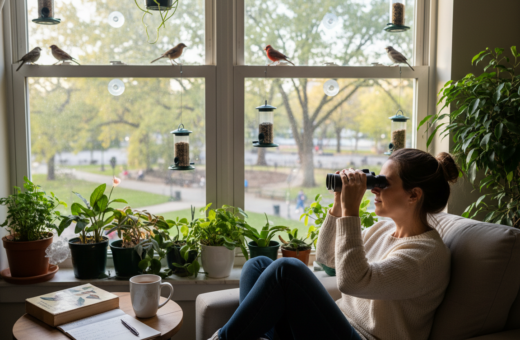
Want a peaceful way to watch birds from your home? This short guide shows how to turn a simple window into a calm spot for connecting with nature, even in a noisy building.
Lisa Bono, who once ran a parrot supply store, planned a special bird room for years to keep her flock safe from predators. Her focus on height and quiet taught useful lessons for anyone adding a viewing area to a house.
A well-planned addition can create a small, secure area where you enjoy wild birds without city noise. You will need patience and the right setup to make the window feel like a gateway to the outdoors.
Key tips: pick a higher location away from ground traffic, reduce noise, and provide safe perches or feeders that do not attract threats. These steps help both your pets and the local birds thrive.
Key takeaways: Plan for safety from predators, choose a quiet high spot, and be patient—small changes turn a window into a lasting connection with nature.
Anúncios
Why Create an Indoor Bird Observation Space
Creating a simple viewing nook at a window gives families a steady way to connect with local wildlife. This approach makes bird watching easy to fit into busy days and helps parents teach children about nature close to home.
Watching birds provides real ecosystem benefits, like pest control and seed dispersal. That makes this activity useful for the whole family and for neighborhood gardens.
How to make it work:
Anúncios
- Set a small ledge or seat and place feeders with food that attract diverse species.
- Keep a list of sightings so children can track patterns and learn names from a bird guide.
- Use binoculars to help kids see details and spark questions that build lasting interest.
Even when you work from home, a dedicated place for birding turns ordinary breaks into learning moments. Parents find it a low-cost way to encourage curiosity about animals and the backyard.
Selecting the Ideal Window Location
Choose a window that frames active trees or backyard shrubs to turn a view into reliable wildlife activity. A clear sightline to perches and cover matters because birds use nearby trees and structures to land and watch for danger.
Evaluating Exterior Views
Look for windows that face trees or a backyard area where feeders and shrubs are visible. Elevated windows usually reduce predator risk compared to ground level views.
In a house, a higher window gives safer access for birds while limiting disturbances from people or pets. Pick a view with varied perches so animals can approach naturally.
Optimizing Interior Comfort
Make room for a chair or floor cushion so you can stay warm during winter and wait without startling the birds. Keep the floor area clear and comfy; long waits are normal when birdwatching.
Use soft lighting and minimize sudden noises or movement near the window. These small comforts help you enjoy more sightings and keep predators and distractions at bay.
- Tip: Place feeders where birds can feed safely out of reach of predators.
- Tip: Avoid busy walkways or lots that create constant motion in your view.
Ensuring a Safe Environment for Your Birds
Healthy air and low-toxin finishes are the foundation of a safe viewing area for your birds. Make sure the room uses low-VOC paints and certified flooring so tiny respiratory systems stay protected.
Managing Air Quality and VOCs
How: Choose paints like Natura by Benjamin Moore and flooring such as Coretec Plus. Coretec Plus carries GREENGUARD Gold certification, which means the product passes strict tests for low emissions.
Why: Birds are highly sensitive to airborne pollutants. Low-VOC finishes reduce the chance of breathing irritation and long-term harm.
- Make sure any work in the house includes strong ventilation so fumes clear fast.
- Make sure to avoid harsh chemicals near the ground or windows where birds may search for food.
- When choosing a new floor or paint, look for clear certification to reduce risk in the environment.
Small choices prevent big problems. If you make sure materials are certified and ventilation is adequate, the area in your home will stay safe for both people and birds.
Learn more about safe materials and
Essential Supplies for Your Indoor Birding Station
Gathering a few simple tools near your favorite window makes birding easier and more rewarding.
Start with three basics: a good bird guide, a notebook, and binoculars. These help you identify species and keep a running list of sightings.
Keep supplies tidy in a small table or a basket next to the addition. That way you can reach feeders, food, and notes without startling any visitors.
Make sure the floor is clear and the air is fresh when you set up. Lisa Bono aired out cabinets and countertops before use to avoid VOCs and protect the animals you attract.
“A clean feeder and fresh food bring regular visits and reduce disease risk.”
- Keep a list of sightings and refresh feeder food often to encourage repeat visits.
- Regularly clean your feeder to prevent illness among birds you watch.
- When you work on the area, make sure ventilation is good and the floor stays clear for safe movement.
Simple gear goes far: binoculars and a reliable bird guide are the most essential tools. Use other items as needed, but keep the setup low-toxin and easy to maintain.
Attracting Local Wildlife to Your View
With the right plants and feeders, your view can become a lively classroom for nature. Create layers of cover and food so birds visit often and feel safe near your window.
Choosing Native Plants
Why it matters: Native plants provide natural food, shelter, and nesting sites. They support insects and seeds that local birds prefer.
How to do it: Pick shrubs and trees that fruit or seed through the seasons. The Habitat at Home program offers free guidance and certification to help you plan.
Installing Feeders
Use a mix of feeders and seed types to attract different species. Place a bird house nearby and keep feeders clean to lower disease risk.
- Hang feeders near cover but away from predator routes.
- Rotate food types to see which birds visit.
- Keep a short list of sightings and use binoculars to study behavior.
Providing Water Sources
Offer shallow baths and a steady water source. Clean water helps birds in hot days and cold weather.
“Native plants, clean feeders, and water are the best steps to welcome wildlife.”
Maintaining a Healthy Habitat for Songbirds
Providing a mix of trees, shrubs, and reliable food sources helps song species flourish.
How: Plant layered vegetation from groundcover to canopy. This supports finches, sparrows, and nuthatches that need cover, nesting sites, and insects.
Why: Layers create shelter and feeding zones. Different species use different plant levels, so a varied yard supports more birds and animals.
- Offer a variety of food: berries, nuts, and seed mixes to attract diverse birds.
- Leave a few snags (dead trees) where cavity nesters can find homes; teach children this value.
- Clean your bird house and feeders often to prevent disease spread among visiting birds.
- Protect the area from predators by placing feeders near cover but away from quick predator access.
- Join a habitat certification program to gain recognition and learn best practices.
“Regular cleaning of baths and feeders keeps songbird populations healthier and more resilient.”
Small, steady efforts in your home and yard make a big difference. Keep food fresh, monitor feeders, and expand plant diversity to help nature thrive.
Common Mistakes to Avoid During Setup
Small setup missteps can turn a welcoming window into a hazard for local wildlife. Fixing these early makes the area safer and more inviting for birds.
How and why: Placing feeders too close to the ground exposes visitors to predators like neighborhood cats and other animals. Ground level setups cut survival odds and reduce visits.
- Keep feeders elevated and near trees or cover so birds can escape quickly.
- Make sure the birding spot is not at ground level; height reduces predator access.
- During winter, shield your window setup from harsh weather to keep food and water usable for several days.
- Avoid materials that emit fumes. Lisa Bono warned that construction dust and airborne particles can harm sensitive respiratory systems.
- Clean feeders regularly—dirty equipment is a top reason birds stop returning.
- If you work on the house, move birds to a separate room to protect them from dust and noise.
“Simple placement and clean feeders keep visits steady and reduce predator risk.”
Conclusion
A calm, well-kept view can make daily moments into meaningful nature lessons. Follow simple steps, keep feeders and water clean, and be patient to attract regular visitors. These habits help songbirds thrive and make your routine more rewarding.
Parents can use this setup to teach children about wildlife. Keep a short list of species you see and share sightings as a family project. Joining a habitat certification program boosts local conservation and adds purpose to your efforts.
Consistent care and simple, low-toxin choices turn a window nook into a lasting place for birding and birdwatching. With time and gentle effort, you’ll enjoy nature from home for years to come.