Anúncios
The sound of chirping signals lazy summer mornings and backyard gatherings. Many families crave that calm soundtrack, and you can shape your home to invite more of it.
Start by observing how feathered visitors use nearby areas. Noting where a bird lands, feeds, or rests helps you place food and water in the right way.
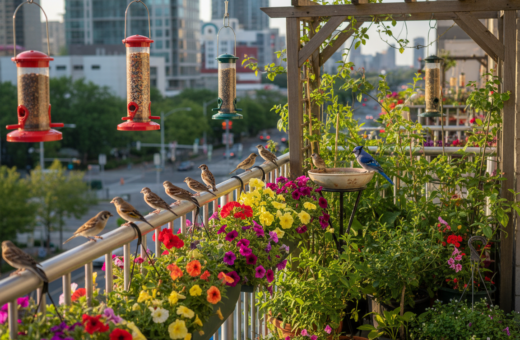
Transforming a small balcony into a welcoming space takes simple moves: add a water source, offer varied seeds, and include seasonal shelter.
Keep disturbances low and patterns consistent. Birds respond to steady routines, so small, reliable offerings encourage longer visits.
With thoughtful placement and a little patience, you create a living corner where nature and family time blend naturally.
Anúncios
Understanding the Appeal of Your Balcony to Local Wildlife
Tall surfaces and sheltered spots can feel like a tree canopy to local wildlife, so they draw frequent visits. This explains why pigeons and other common birds may treat an elevated area as a safe perch or nesting place.
Health and legal considerations matter. Bird droppings can carry dangerous pathogens and diseases such as Histoplasmosis and Cryptococcosis. In the UK, the Wildlife and Countryside Act 1981 makes it illegal to harm birds or interfere with nests, so use humane bird control methods.
Homeowners often look for practical solutions common to urban settings. Wind chimes, bird spikes, and bird netting are popular deterrents, but each has pros and cons. Choose options that discourage birds without causing injury.
Anúncios
“Address droppings promptly — build-up can spread bacteria that affect human health.”
Simple prevention—removing easy food sources, sealing gaps, and adding netting where needed—reduces noise, mess, and pest pressure. Early action keeps your property cleaner and protects household health.
Designing Effective Balcony Quiet Zones Birds Will Love
Creating welcoming outdoor spaces for feathered visitors relies on safe feeding stations and reliable water. Start by mapping where animals already stop, then place resources where they feel secure but are safe from pets.
Selecting the Right Feeders
Offer variety. Use tube and platform feeders and keep them clean. Fill feeders with black oil sunflower seeds, peanuts, and suet to attract different species. Rotate food and check feeders often to prevent mold and pests.
Providing Fresh Water Sources
Provide a shallow birdbath two to three inches deep. That depth lets many species drink and bathe without risk. Change the water daily in warm weather and keep the bath free of debris.
Incorporating Protective Shelter
Plant evergreens or berry-producing shrubs so visitors have a safe waiting spot. Block unnecessary openings and nesting spaces where you don’t want roosting.
- Place feeders and water where they are visible but safe from cats.
- Use subtle bird netting to prevent access to sensitive areas without spoiling views.
- Observe visitors and adjust deterrents and feeding strategies over time.
For more tips on creating welcoming outdoor habitats, learn more about attracting garden visitors.
Essential Maintenance for a Clean and Healthy Habitat
Small, regular maintenance tasks prevent disease and protect visiting animals. Routine care keeps feeders and water sources safe and helps you enjoy more visits over time.
Sanitation is the backbone of a healthy outdoor space. Scrub feeders with hot, soapy water at least once every two weeks and rinse them well. Change birdbath water daily in warm weather to stop mosquitoes; larvae need 7–10 days to hatch.
Sanitation Practices for Feeders and Baths
Simple habits make a big difference.
- Wash feeders and platform trays with a mild solution and let them dry completely to prevent mold and clumping food.
- Remove accumulated shell debris and droppings from the property to reduce pest attraction and pathogen buildup.
- Clean birdhouses after each brood and inspect netting and spikes to ensure they remain sanitary and effective.
- When problems persist, consider professional bird control tools like Avian Fog Force TR or consult Avian Enterprises at 888-868-1982 for options that work without causing harm.
“Refreshing water and removing waste are the easiest steps to protect health and reduce disease.”
For guidance on habitat-friendly practices and songbird needs, see this songbird habitats overview or explore professional repellent options when considering advanced deterrents.
Common Mistakes to Avoid When Attracting Birds
What feels like a smart fix can accidentally harm animals or make nuisance species worse. Learn the common missteps so you can keep birds longer and protect wildlife.
Using harmful deterrents is a top mistake. Avoid toxic sprays and sharp spikes that can injure wildlife. Bird spikes and poorly applied netting can cause entanglement or wounds.
Harmful Deterrents
- Do not use pesticides that kill insects; they remove food for chicks.
- Rotate plastic predator decoys and chimes — static displays lose effect as birds may learn they pose no threat.
- Choose humane bird deterrents and install netting correctly to avoid causing harm.
Ignoring Seasonal Needs
Failing to adjust for seasons reduces success. Provide extra water during hot months and leave safe nesting material in spring.
“Persistent droppings in certain areas signal that current strategies need changing.”
Conclusion: Creating a Lasting Sanctuary for Your Feathered Visitors
Building a lasting sanctuary on your balcony needs steady care and simple, smart steps. Offer clean food and fresh water, and add safe nesting sources so visiting birds return more often.
Use humane control solutions like properly installed bird netting and gentle deterrents when pest issues arise. These choices protect your property and keep your home safe from health risks.
Patience is key. Over time, consistent routines and good maintenance create a reliable way to keep birds happy and healthy for your family to enjoy.