Anúncios
Chris published this practical guide in Birding Tips on 28/03/2026 to help urban residents support local biodiversity. In it, he explains how even the smallest concrete ledge can become a vital refuge for wildlife without blocking natural routes.
This short introduction shows why careful placement of plants and feeders matters for safety and success. Use the right materials and containers to keep flight lines clear while offering food and water that suit local birds.
Over the next sections you will find clear steps and examples to balance your living needs with nature. Follow this guide to design a tidy garden that attracts wildlife, saves time on upkeep, and keeps visitors coming back.
Creating a Balcony Arrangement Bird Friendly Space
Even a modest apartment ledge can offer vital hydration and shelter if you plan for weight and safety. Choose Fibre Reinforced Concrete (FRC) for basins: it is 30–50% lighter than solid concrete and gives the stability of stone without heavy load.
Keep water shallow. Fill baths to 1–1.5 inches to protect small wildlife and to reduce splashing onto neighbors below. A small solar dripper adds sound and movement, helping local birds locate the water.
Anúncios
Place the basin near a wall or corner to give visiting species a quick refuge. Clean water often and check mounts for secure support. This approach offers the practical advantage of low upkeep while supporting local wildlife.
- Lightweight FRC reduces structural stress for apartment ledges.
- Shallow depth minimizes risk and neighbor complaints.
- Solar drippers and tidy placement increase use by local birds.
For more practical tips on setting up a compact watering station, see these balcony birdwatching tips today.
Selecting Functional Containers for Small Footprints
Smart container choices let a small ledge become a functional habitat without cluttering usable areas.
Anúncios
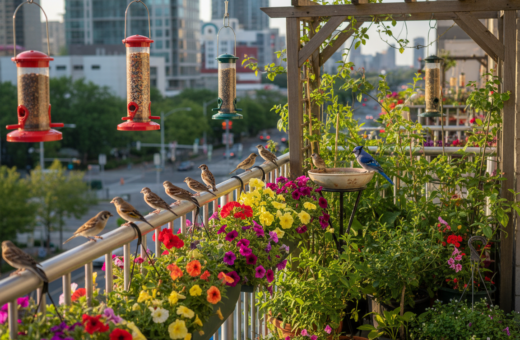
Prioritize low-profile feeders that hook to a railing and keep the ground clear. Choose models with drainage holes to stop moisture from spoiling seeds and to reduce mold risk.
Consider tech that saves time: BirdBlink smart feeders let you monitor seed levels and identify visitors in real time via a built-in camera. This makes refills and species tracking effortless.
Space-Efficient Feeders
- Use narrow, weather-resistant materials that endure high-rise conditions.
- Place feeders near protective plants to mimic forest-edge conditions and lure insects naturally.
- Pick feeders that hold mixed seeds but shed water to keep food fresh.
Designing Effective Hydration Stations
Choose ceramic or plastic basins that clean easily at the sink. Keep water shallow — do not exceed 2 inches — so small birds can wade safely.
Advantage: shallow water reduces drowning risk and draws more visitors to your garden perch while plants attract insects and create a lasting food web.
Essential Safety Measures for Urban Wildlife
Simple window treatments and secure mounts reduce risks for visiting birds at high-rise homes.
Preventing window collisions is critical. Use UV-reflective films or translucent stickers to break up dangerous reflections on glass. These solutions make windows visible to wildlife without harming light inside the home.
Protect pets and feeders: keep indoor animals away from the balcony while feeders are in use. Secure the ledge with durable mesh or screens to let you enjoy pets and keep birds safe.
- Fasten feeders and plant mounts with heavy-duty hardware to prevent items becoming projectiles in strong wind.
- Provide nearby cover so birds can retreat quickly when startled by predators or sudden movement.
- Apply window treatments proactively — they work better than hoping collisions won’t occur.
Maintenance matters: regular checks of mounts, mesh, and film keep the area safe and inviting. Over time, these steps encourage more birds to return to your balcony and help create a reliable urban sanctuary.
For further setup ideas, see a detailed guide on creating a secure ledge habitat.
Maximizing Vertical Space for Avian Habitats
Vertical gardening makes small outdoor areas act like layered woods. Stacking planters and shelves creates perches, cover, and food sources for local birds without crowding usable floor zones.
Utilizing Wall-Mounted Gardens
Wall systems convert an empty wall into a living screen that offers privacy and refuge. Pick weather-resistant materials and secure mounts so plants and feeders stay safe in harsh conditions.
Creating Tiered Plant Displays
Tiered shelving with native trees and shrubs mimics forest structure. This gives multiple perching levels and layers of foliage that help attract birds and insects.
- Use durable materials for outdoor shelving.
- Include flowering perennials and herbs for seeds, nectar, and nesting fiber.
- Stack pots to create a lush vertical garden that provides food and cover.
Selecting Native Non-Toxic Plants
Choose native shrubs and trees that produce berries and support local insects. Native plants need less water and resist local conditions, making them the best long-term choice for wildlife.
Conclusion: Sustaining Your Urban Sanctuary
Small interventions—right plants, shallow water, secure mounts—make a big difference for urban wildlife. Take steady steps: pick native plants and herbs, clean ceramic dishes, and check feeder mounts on a schedule.
Consistent care keeps your home refuge inviting. Native trees, shrubs, and flowering plants bring insects and berries that provide food and nesting material. Monitor window visibility and safety to reduce collisions.
Share this guide and help neighbors create habitat. Learn how to create a native plant container garden to boost nature in compact areas today. Your small garden proves nature can thrive in city life.