Anúncios
Watching local wildlife over time turns casual walks into meaningful study. By noting when birds arrive and depart, you can reveal clear migration rhythms and daily activity trends.
Simple, regular notes help you see how weather, food, and habitat change behavior across each season. A short log kept at the same time each day captures reliable data and sharpens your eye for subtle shifts.
Whether you watch from a porch or a neighborhood park, organizing sightings shows persistent patterns. This approach makes it easier to compare years and to spot unusual changes that may matter to researchers or local groups.
Start with small, repeatable steps: pick a time, record the species you see, and note the activity you observe. Over weeks and months, those entries build a vivid record of life cycles and migration timing.
Understanding Local Bird Activity Patterns
Noting how local populations use food, water, and cover reveals clear rhythms in their daily lives. These resources shift over the calendar year and shape when and where birds appear.
Anúncios
Watching how different species interact with feeders, puddles, and hedgerows helps you predict visits. Pay attention to routine times of day for feeding, preening, or calling.
Small cues—like earlier morning foraging or concentrated visits after a rain—signal changes in local behavior. Many observers link those shifts to short-term weather events and habitat changes.
- Resource availability controls presence and movement.
- Daily routines reveal migration or local residency patterns.
- Noting weather-linked changes helps anticipate arrivals and departures.
Recognizing these cycles lets you prepare for migratory visitors and see when resident populations change their ranges.
Anúncios
Why You Need a Seasonal Bird Observation Tracking Journal
A simple notebook helps you notice small changes in behavior that daily life often hides. Over weeks, short entries form a clear personal record that shows patterns you might otherwise miss.
Benefits of mindfulness
Keeping regular notes slows you down. It trains your eye and calms the mind. Authors like Clare Walker Leslie explain that writing creates a lasting record of skill and growth. John Muir Laws teaches drawing and journaling techniques that sharpen observation and memory.
Contributing to citizen science
Well-kept pages do more than help you. Consistent entries provide useful data for local projects. When you add dates, locations, and short details, your notes can help track regional populations.
- Build a simple format to record time, species, and behavior.
- Use specific pages for sketches and quick counts.
- Share selected entries to help community science efforts.
“The act of recording invites you to see more closely and remember more clearly.”
Essential Tools for Your Field Notebook
Well-chosen tools let you turn brief sightings into reliable data and clear sketches.
Start with a durable notebook that stands up to rain and rough handling. Choose one with enough pages for sketches and text so you can keep consistent notes across a wide range of trips.
Pack a mix of pens and pencils to capture different levels of detail. Fine liners work for quick notes; pencils let you sketch plumage and posture.
Consider the Clever Fox bird journal if you want a ready-made layout. It includes a 60-day satisfaction guarantee that gives you time to test the format and price point.
Bring reliable resources like a compact field guide and a smartphone app to aid ID and habitat notes. These tools help you confirm species and record context.
- Durable notebook with plenty of pages
- Varied pens/pencils for multiple levels of detail
- Field guide or app as reference resources
“A small kit makes consistent journaling in nature simple and effective.”
Setting Up Your Seasonal Tracking System
, Begin with a simple layout that reserves room for date, place, and quick notes each outing. Pick either a small notebook or a basic app. The goal is to make entries easy so you will keep them.
Choosing Your Format
Decide if you want paper pages or a digital file. A compact notebook is handy in the field. Apps make backup and searching fast.
Organizing by Date and Location
Create clear headings for dates and locations. Use one page per site or one line per visit. This lets you compare areas and spot patterns in birds and data quickly.
Creating an Index
Build an index at the front or end. List locations, species, and key notes with page numbers. An index turns a growing personal record into a usable reference.
- Reserve space for time, weather, and brief behavior notes.
- Use simple codes to speed entries.
- Keep one master list of locations and resources for easy cross-checking.
Capturing Behavioral Data in the Field
Quiet, focused field visits reveal small actions that tell larger stories about local birds.
Remain still and attentive. Sit or stand where you won’t disturb activity. Let movements and calls happen naturally so you can record genuine behaviors.
Note specific actions like feeding, nest building, or interactions with other birds. Record the time and short habitat details for each entry. These tiny facts add context to your data.
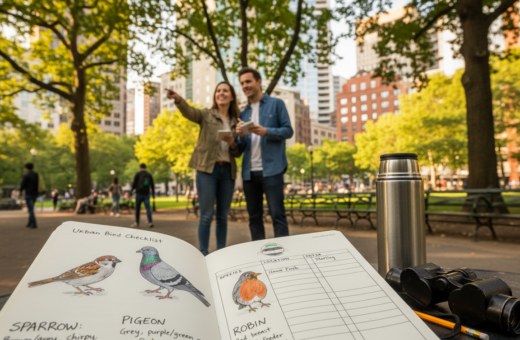
Use a simple bird journal layout with headings for time, place, and behavior. Keep entries brief on each page so you can make quick notes without losing the moment.
Consistency matters. Regular journaling turns scattered notes into a useful dataset that reveals patterns in behaviors and habitat use over time.
“Clear, repeated notes let you move from ID to understanding.”
- Stay quiet to observe subtle actions.
- Record time of day and habitat details.
- Use structured pages to capture repeatable data.
- Make notes often to build a rich set of observations.
Identifying Seasonal Shifts in Local Populations
To spot real shifts in local populations, focus on timing and repeated behaviors across weeks.
Recognizing Migration and Breeding Cycles
Watch arrival windows and courtship displays. Migration timing often concentrates visits into narrow windows. Breeding activity brings loud calls, nest building, and intense foraging.
Note specific examples. Seeing a red-breasted sapsucker in early spring often marks a meaningful change in local habitat use. Record the sighting in your bird journal and add quick notes on behavior.
- Separate residents from migrants by repeat visits across years.
- Log nest building, courtship, and feeding near nests to mark breeding peaks.
- Compare entries across several years to reveal lasting patterns.
Consistent journaling turns casual sightings into useful data. Clear, repeated observations show how climate and habitat changes affect species and populations over time.
“Recording the timing of migration and breeding reveals trends you would otherwise miss.”
Integrating Weather and Habitat Conditions
Noting the day’s weather and habitat features turns routine entries into usable ecological data. Record temperature, wind, and precipitation to link short-term changes to shifts in behavior.
A reliable bird journal includes a small space for conditions: time, cloud cover, wind, and a note on nearby water or vegetation. These items help explain why certain species arrive or move on.
Track how visits change in spring and during migration windows. Over several years, your notes reveal patterns in how local populations respond to storms, drought, or warming nights.
- Record simple weather measures each visit.
- Note habitat details like shrubs, water, or recent mowing.
- Compare entries yearly to assess resilience and shifting ranges.
“Consistent environmental notes turn casual observations into a scientific record.”
Leveraging Digital Tools for Long-Term Records
A mix of GPS-enabled apps and a paper companion gives both precision and permanence to your records. Use eBird, Project FeederWatch, or iNaturalist to upload photos and GPS coordinates. These platforms create a searchable public record that can help track bird populations over time.
The Dark Skies for Migration notebook is a great offline option. With 80 FSC-certified pages, it pairs well with mobile uploads for backup and sketches.
- Upload coordinates and photos now, then pin later in your app if you need to refine the location.
- Combine paper pages with digital entries to keep records safe and easy to share.
- Aggregated data from thousands of users helps researchers monitor migration and population shifts.
Using GPS lets you map habitat and behaviors accurately across years. This mixed approach makes it easier to monitor spring migration and contributes useful data to science.
“Combine simple notes with reliable apps to make your records useful for decades.”
Common Mistakes to Avoid When Journaling
Aim for clarity: a few key facts per visit beat long, messy paragraphs every time. Keep entries focused so you actually make them in the field.
Overcomplicating Your Entries
Too much detail can slow you down. Trying to record every note, sketch, and measurement turns a relaxing outing into work.
Pick three essentials: species, behavior, and a quick context line. This keeps your pages useful and repeatable.
Ignoring Environmental Context
Skipping weather conditions or habitat details loses the “why” behind changes in populations and behaviors.
One line for wind, cloud, or nearby water helps link notes to real-world causes. Small context items make your data far more valuable later.
- Keep entries short: time, species, one behavior, and one habitat note.
- Use consistent abbreviations to save time on pages.
- Review entries weekly to spot gaps and refine what to record.
“Simple, consistent notes are the backbone of useful long-term records.”
Tips for Maintaining Consistency Throughout the Year
Keep a short, steady habit of recording each outing to turn brief sightings into a reliable long-term dataset. Small, regular entries make it easy to spot patterns and changes over years.
Use a dedicated notebook such as the Dark Skies for Migration edition to keep pages organized and inspiring. A single, familiar tool lowers the barrier to regular notes.
Set a simple routine: check a feeder, walk the same trail, or log a five-minute observation each morning. That habit captures migration windows and spring activity without stress.
- Record time, species, brief behaviors, and one habitat note.
- Accept imperfect pages; steady entries beat perfect ones.
- Share snapshots with online groups to stay motivated.
“A steady flow of short notes builds a dataset that reveals true patterns in local populations.”
Conclusion
Keep a steady habit. A short routine of notes and sketches turns casual outings into useful data you can trust.
By recording even small details, you will notice subtle changes that mark migration windows and the arrival of spring. Over the years, those entries become a vivid personal record.
Embrace simple journaling. Whether you are new to this or experienced, a clear format helps you keep going and share useful information. Your journal will grow with you and reveal patterns across each season.
Happy birding. May your future entries bring fresh insights and lasting enjoyment as you follow migration and local changes.