Anúncios
Observing local birds from your home can feel like unlocking a small, daily show. Knowing the best time of day they are most active helps you spot more species and hear more calls. A well-placed window sill becomes a private nature patch with better chances of success.
Start simple: pick a comfortable seat, bring binoculars, and note weather patterns that influence behavior. Short sessions at dawn and late afternoon often yield the most movement and song. Even brief, regular checks build skill in identification and give people a reliable view without leaving home.
This guide shows practical ways to set up a cozy viewing spot and to learn how birding fits into daily life. With patience and a small routine, birdwatching turns a city sill into a calm link to nature for beginners and seasoned birders alike.
Understanding the Daily Rhythms of Urban Birds
Urban song patterns follow predictable daily arcs that help you know when to listen or look from home. Knowing these rhythms makes it easier to plan short, rewarding sessions at your sill and to learn identification cues from calls and songs.
The Dawn Chorus
The dawn chorus is the loudest vocal peak. In many latitudes it begins before 5 AM and swells in spring as males claim territory and attract mates.
Anúncios
Using a Haikubox 24/7 identifier helps birders record songs for later review. That makes it simpler to confirm which species visit your area and to track migration shifts.
The Midday Lull and Dusk Activity
Midday often brings a quiet stretch. Many birds rest or search for food when the sun is high. This lull gives you an example of daily rhythm and a calmer chance to spot transit.
As dusk approaches, choruses return to reinforce boundaries and to guide birds to roosting sites. Even in winter, knowing these patterns helps birdwatching from your windows produce better results.
Anúncios
“Recording calls over several days reveals patterns you might miss in a single outing.”
- Use binoculars or a recorder to log songs.
- Note weather and migration days for richer identification details.
- Observe short sessions across different parts of the day to learn local species.
Optimizing Your Birds Active Time Window Watching Routine
Set a short, repeatable routine at your sill to attract more visitors and sharpen ID skills. Consistency helps species accept your presence and increases chances of seeing varied behavior.
Plan sessions for morning and late afternoon when activity often peaks. Check local weather conditions before you sit; wind and rain change patterns quickly.
Use a bird identification app to log calls and photos during spring migration. Keep a simple journal of sightings and notes on weather and songs. Over days you will spot trends; for example, the northern cardinal often visits feeders at first light and again near dusk.
“In September, a hawk watch station recorded over 10,000 broad-winged hawks in a single day.”
- Be consistent: experienced birders observe at the same times each day.
- Use tools: binoculars or a spotting scope and an app improve identification.
- Create attractants: placing bird feeders close to your glass brings more species into view.
Creating the Perfect View from Your Windowsill
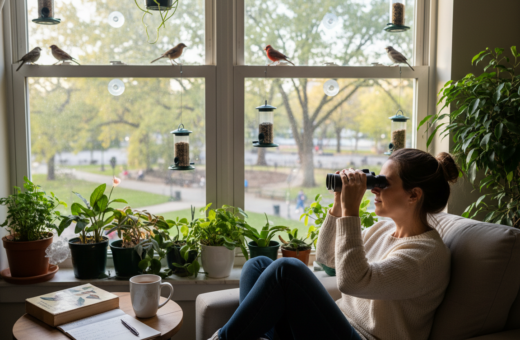
Create a dedicated sill setup to turn a simple pane of glass into a small nature observatory. Choose a location that gets good light and a clear sightline to your yard or nearby green space. Clean glass and large panes make identification easier and reduce reflections that can scare visitors away.
Selecting the Right Window
Aluminium or uPVC frames with big glass areas work best. They offer a wide, unobstructed view and steady support for close-up feeders. Pick a sill that faces shrubs or native plantings to draw more species closer to your home.
Installing Close-Up Feeders
Stick-on feeders attach directly to the glass and bring small species within inches for clear identification. Use seed types suited to local birds and clean feeders regularly to keep the area healthy.
Enhancing Your Viewing Comfort
Place a soft chair or cushion by the sill to avoid fatigue during longer sessions. Keep binoculars and a notebook nearby, and enjoy a warm cup of tea for added comfort.
- Tools: binoculars with good zoom reveal feather details without disturbance.
- Habitat: native plants in the yard attract more species over the year.
- Care: a clean pane gives the best view and clearer photos.
External Factors That Influence Bird Activity
Weather and seasons shape how often different species appear near your glass. Mild days with light wind encourage more movement and songs. In contrast, heavy rain or strong gusts often keep many species grounded.
The Impact of Weather and Seasonal Changes
Migration drives major shifts in local visits. Spring and autumn send waves of new species through your area. Using binoculars during these pulses helps spot rarities that pass only for a few days.
In winter, scarce food sends more visitors to feeders across the day. That makes midseason observation rewarding for those who log sightings. For example, many birds pause during storms and resume feeding once skies clear.
“Storms often delay normal feeding and singing routines until conditions improve.”
- Seasonal migration brings different species in spring and fall.
- Wet, windy weather usually reduces activity; mild conditions boost it.
- Track weather conditions to predict the best parts of the day to observe from your windows.
Conclusion
Tuning into daily rhythms gives anyone a clearer sense of which species will appear and when. Mastering this pattern helps people enjoy a closer view of local wildlife from the comfort of home.
Use simple tools like binoculars and an identification app, keep a short journal, and stay consistent with sessions. These tips help both beginners and experienced birders sharpen calls and identification details across the days and seasons.
Pay attention to conditions and to spring migration peaks. With patience and the right window setup, birding becomes a peaceful way to learn more about nature and the birds that share your field of view.